
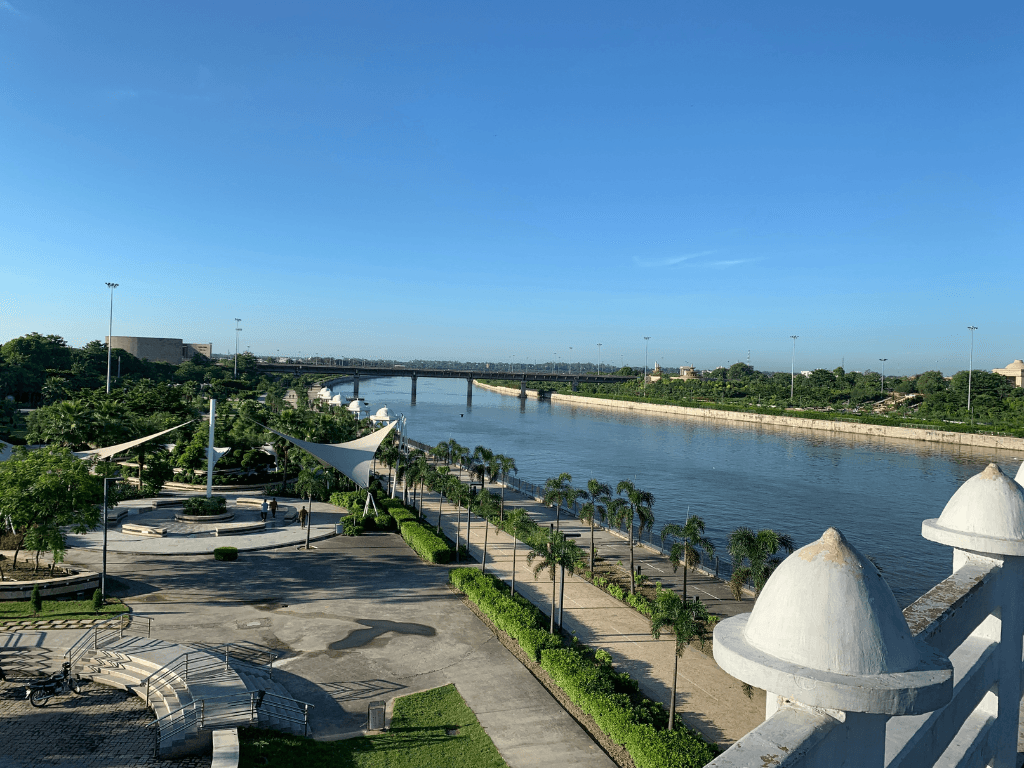
Lucknow A Cultural Tour Package , Have you ever dreamed of stepping into a city where history whispers from every corner, where poetry flows like the gentle Gomti River, and where hospitality isn’t just a word but a way of life? Welcome to Lucknow, the capital of Uttar Pradesh and one of India’s most culturally rich destinations.
Lucknow isn’t just another historical city—it’s an experience, a feeling, a journey into India’s glorious past where Mughal grandeur meets colonial elegance. This city has managed to preserve its soul despite centuries of change, offering modern travelers a authentic glimpse into the refined lifestyle of the Nawabs who once ruled here.
A cultural tour package to Lucknow promises much more than visiting monuments. It’s about savoring kebabs that melt in your mouth, watching artisans create intricate chikankari embroidery, getting lost in architectural labyrinths, and experiencing the famous Lucknowi tehzeeb (etiquette) that locals still practice with pride. Ready to uncover this heritage gem? Let’s dive in.
Why Lucknow is Called the City of Nawabs
The title “City of Nawabs” isn’t just a romantic nickname—it reflects Lucknow’s historical identity. During the 18th and 19th centuries, Lucknow served as the capital of the Awadh (or Oudh) region, ruled by a succession of Nawabs who were passionate patrons of arts, architecture, music, and cuisine.
These Nawabs weren’t merely rulers; they were connoisseurs of refined living. They transformed Lucknow into a cultural powerhouse where poets like Mirza Ghalib found appreciation, where kathak dancers perfected their art, and where culinary traditions reached unprecedented heights. The Nawabs built magnificent monuments, established gardens, and created a court culture that emphasized sophistication, courtesy, and artistic excellence.
Even after the British annexation of Awadh in 1856, Lucknow retained its cultural distinctiveness. The legendary politeness of Lucknow’s residents, their love for Urdu poetry, and their refined manners are direct legacies of this Nawabi era. When you visit Lucknow today, you’re not just seeing old buildings—you’re experiencing a living culture that has been carefully preserved across generations.
The Architectural Marvels of Lucknow
Bara Imambara – The Great Imambara
The Bara Imambara stands as one of India’s most remarkable architectural achievements. Built in 1784 by Nawab Asaf-ud-Daula, this colossal structure was constructed during a devastating famine as a relief project to provide employment to thousands of people. The story goes that Nawab employed both skilled craftsmen during the day and demolition crews at night to ensure the project lasted longer and helped more people.
What makes the Bara Imambara truly extraordinary is its central hall—one of the largest arched constructions in the world without any support beams or pillars. Measuring 50 meters long and 15 meters high, this hall demonstrates architectural genius that continues to baffle modern engineers. The acoustic properties are equally impressive; a whisper at one end can be heard clearly at the other.
The complex includes a beautiful mosque, a stepwell called the Shahi Baoli with five stories extending underground, and elaborate gateways. The entire structure showcases the distinctive architectural style that blends Islamic and regional elements, creating something uniquely Awadhi.
The Bhulbhulaiya – A Labyrinth of Mystery
Adjacent to the main hall of Bara Imambara lies the Bhulbhulaiya, which literally means “labyrinth.” This intricate maze of narrow passages built on the upper floor features over a thousand interconnected pathways designed to confuse intruders while providing ventilation and structural support to the building.
Walking through the Bhulbhulaiya without a guide is nearly impossible—you’ll quickly find yourself disoriented despite the seemingly simple corridors. The clever design uses staircases that lead nowhere, passages that double back, and dead ends that appear suddenly. It’s said that even locals can lose their way here, making it one of Lucknow’s most entertaining attractions.
From certain points within the labyrinth, you can access the roof, which offers spectacular panoramic views of Lucknow. The engineering that allows this maze to exist while supporting the massive structure below is a testament to the architectural sophistication of 18th-century Awadh.
Chota Imambara – The Palace of Lights
If Bara Imambara impresses with its scale and architectural innovation, Chota Imambara captivates with its beauty and decorative splendor. Built in 1838 by Nawab Muhammad Ali Shah, this monument also serves as his mausoleum and that of his mother.
The name “Chota” (small) Imambara is somewhat misleading, as the structure is quite substantial. What distinguishes it is the incredibly ornate decoration—crystal chandeliers from Belgium, calligraphy adorning the walls, and intricate mirror work that creates a dazzling effect. During special occasions and festivals, particularly Muharram, thousands of lights illuminate the building, earning it the nickname “Palace of Lights.”
The complex includes beautiful gardens, ornamental gates, and the impressive Satkhanda watchtower, an incomplete structure that was intended to be taller than the Qutub Minar but was never finished due to the Nawab’s death. The entire setting creates a peaceful atmosphere where you can spend hours appreciating the details that went into every surface.
Rumi Darwaza – Gateway to Nawabi Elegance
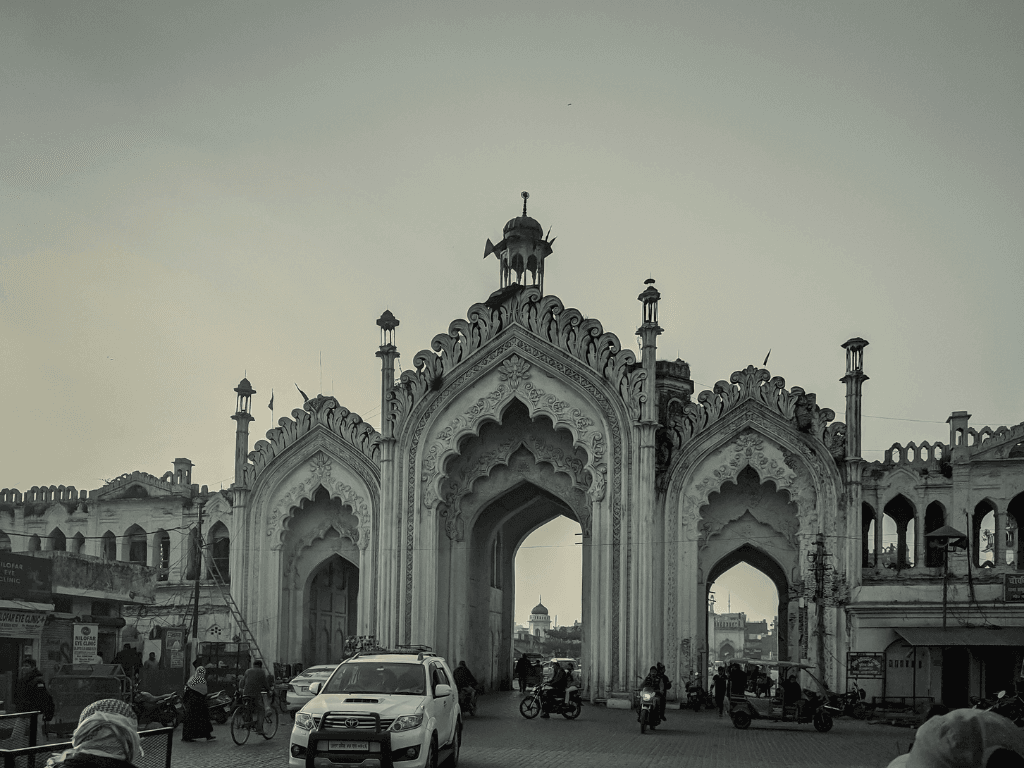
Standing 60 feet tall, the Rumi Darwaza is perhaps Lucknow’s most iconic structure and a symbol of the city itself. Built in 1784 by the same Nawab who constructed Bara Imambara, this magnificent gateway was modeled after the Sublime Porte in Istanbul (Constantinople), which explains the name “Rumi” (Roman/Turkish).
This ornamental gateway leads to nothing in particular now—it was built purely for decorative purposes as an entrance to the old city. The architecture showcases the transition from Mughal to Awadhi style, with graceful proportions and intricate floral designs carved into the stucco.
The Rumi Darwaza looks stunning at different times of day, but it’s particularly magical at night when illuminated. It has become such an integral part of Lucknow’s identity that it appears on countless souvenirs, government logos, and is the backdrop for numerous cultural events and photographs.
Colonial Heritage and British Residency
The Siege That Changed History
Lucknow’s British Residency complex tells one of the most dramatic stories of India’s First War of Independence (also known as the Sepoy Mutiny or Uprising of 1857). This sprawling complex of buildings served as the residence and offices of the British Resident General and became the site of an intense five-month siege.
During the uprising, approximately 3,000 British and Indian defenders held out against rebel forces from June to November 1857. The ruins of the Residency have been deliberately preserved in their damaged state as a memorial to those events. Cannonball marks still pit the walls, and ruined buildings stand as they were left after the conflict.
Walking through the Residency complex today is a sobering experience. The cemetery contains graves of siege victims, including that of Sir Henry Lawrence, the British Resident who organized the defense. A small museum displays artifacts, photographs, and accounts from the siege, providing context to this pivotal moment in Indian history.
The site isn’t just about British colonial history—it represents a crucial turning point that eventually led to direct British Crown rule over India and, ultimately, to the independence movement. The well-maintained gardens and the sense of preserved history make this an essential stop for anyone interested in understanding colonial India.
Religious Harmony in Lucknow
Temples, Mosques, and Churches
One of Lucknow’s most beautiful aspects is its tradition of religious harmony. Despite being known primarily for its Islamic heritage, the city houses significant Hindu temples, Sikh gurdwaras, and Christian churches, all contributing to its cultural fabric.
The Hanuman Setu Temple, situated on the banks of the Gomti River, attracts devotees year-round and becomes particularly vibrant during Hanuman Jayanti. The temple’s location offers peaceful river views and represents the Hindu heritage that predates the Nawabi period.
La Martiniere College, though an educational institution, features one of Lucknow’s most unusual architectural structures—built in a European baroque style by a French adventurer. The attached cemetery and church showcase Christian heritage in the city.
St. Joseph’s Cathedral, consecrated in 1860, represents Gothic Revival architecture and serves as the cathedral church of the Roman Catholic Archdiocese of Lucknow. Its stained glass windows and peaceful atmosphere provide a quiet retreat from the city’s bustle.
This religious diversity isn’t accidental—the Nawabs of Awadh were known for their tolerant policies and respect for all faiths. Many Hindu festivals received royal patronage, and Hindu courtiers held important positions in the Awadhi administration. This tradition of mutual respect continues to characterize modern Lucknow.
The Legendary Tehzeeb of Lucknow
Understanding Nawabi Etiquette
If you’ve heard one thing about Lucknow, it’s probably about its famous “tehzeeb”—a term that encompasses manners, etiquette, refinement, and a certain grace in social interaction. This isn’t just old-fashioned politeness; it’s a cultural philosophy that shapes how Lucknow’s residents interact with each other and with visitors.
Lucknowi tehzeeb manifests in subtle ways—the elaborate greetings, the indirect way of communicating that avoids bluntness, the genuine hospitality extended to guests, and the elegant Urdu expressions that pepper everyday conversation. Even when speaking Hindi, Lucknow residents often use Urdu words that sound more refined and courteous.
This cultural refinement extends to various aspects of life. Clothing tends to be more conservative and elegant. Conversations value wit and wordplay over directness. Disagreements are handled with diplomacy rather than confrontation. There’s a strong emphasis on not causing embarrassment to others—a concept called “sharm” that influences social interactions.
For visitors, experiencing this tehzeeb means being treated with exceptional courtesy and respect. Don’t be surprised if shopkeepers address you with elaborate politeness, if strangers go out of their way to help you navigate the city, or if conversations include poetic references and flowery language. This is Lucknow’s living heritage, and it’s as much a part of your cultural tour as any monument.
Lucknow’s Culinary Heritage
The World-Famous Awadhi Cuisine
Can we talk about Lucknow without dedicating serious attention to its food? Absolutely not! Awadhi cuisine, perfected in the royal kitchens of the Nawabs, is one of India’s most sophisticated culinary traditions. It’s characterized by subtle flavors, aromatic spices, and cooking techniques that require patience and skill.
The dum pukht method, where food is sealed in a pot and cooked slowly over low heat, originated in Awadh. This technique allows ingredients to cook in their own juices, creating incredibly tender meat and deeply layered flavors. The result is food that’s rich without being heavy, flavorful without being overpowering.
Kebabs in Lucknow are legendary. Unlike the robust tandoori kebabs of North India, Awadhi kebabs are delicate, often minced so finely they melt on your tongue. The famous Tunday Kababi, established in 1905, serves the legendary galouti kebab made from over 160 spices. The story goes that these kebabs were created for a toothless Nawab who wanted to enjoy meat without chewing.
Biryani here differs from the Hyderabadi or Kolkata versions—the Awadhi style uses less spice and more subtle flavoring, with rice and meat cooked separately and then layered. The nihari, a slow-cooked meat stew traditionally eaten for breakfast, showcases the patience that defines Awadhi cooking.
Must-Try Dishes and Where to Find Them
Your culinary journey through Lucknow should include several essential experiences. Start your morning with nihari and kulcha at one of the old city eateries—Raheem’s in Chowk is particularly famous. The thick, flavorful curry paired with soft bread is the perfect introduction to Lucknowi breakfast traditions.
For lunch, seek out an authentic Awadhi thali that includes items like korma, pasanda, and pulao. Oudh 1590 at the Taj Mahal Hotel offers upscale versions of traditional dishes in an elegant setting, while Dastarkhwan provides excellent food at more moderate prices.
Evening is kebab time. Visit Tunday Kababi in Aminabad for galouti kebabs, or try kakori kebabs at Idris Biryani. Don’t miss the sheermal (slightly sweet saffron bread) and warqi paratha (layered flatbread) that accompany these kebabs.
For desserts, Lucknow offers unique treats. The makkhan malai, available only during winter months, is an ethereal foam-like dessert that disappears on your tongue. Basket chaat, despite its name, is a crispy potato basket filled with yogurt and chutneys—savory rather than sweet but absolutely essential.
Royal Cafe in Hazratganj has been serving the same quality since 1957, offering both snacks and full meals in a classic setting. For the adventurous, explore the narrow lanes of Chowk area after sunset, where numerous street food vendors create magic with simple ingredients.
Traditional Arts and Crafts
Chikankari – The Delicate Embroidery
Lucknow is synonymous with chikankari, an intricate embroidery style that transforms simple fabric into wearable art. This delicate needlework typically features floral patterns done with white thread on light-colored fabric, though modern variations include colored threads and various fabrics.
The craft involves several different stitches—some flat, some raised, some creating a shadow effect from the reverse side. A single piece can take weeks or even months to complete, depending on the intricacy. Traditionally done by women in their homes, chikankari has become a significant industry in Lucknow, providing livelihood to thousands of artisans.
When shopping for chikankari, you’ll find everything from affordable cotton kurtas with simple embroidery to expensive silk sarees with elaborate work. The Chowk area has numerous shops, but for assured quality, consider government emporiums like the UP Handloom Store or established boutiques in Hazratganj.
Watching chikankari being created is fascinating—many shops and cooperatives welcome visitors to see artisans at work. The precision with which they create perfect patterns without any marked guidelines demonstrates skills passed down through generations. Purchasing authentic chikankari directly supports these traditional craftspeople and ensures you’re getting genuine handwork rather than machine-made imitations.
Other Handicrafts and Shopping Destinations
Beyond chikankari, Lucknow offers various traditional crafts. Zardozi (gold and silver embroidery) work creates stunning decorative pieces and bridal wear. The craft involves stitching metallic threads onto fabric to create raised, three-dimensional designs.
Ittar (traditional perfume) making is another Lucknowi specialty. Unlike alcohol-based modern perfumes, ittars are natural fragrances made from flowers, herbs, and spices in a sandalwood oil base. Shops in the old city, particularly in Aminabad, offer dozens of scents—rose, jasmine, saffron, and unique blends created according to traditional formulas.
Hazratganj serves as Lucknow’s main shopping district, with a mix of modern stores and traditional shops. The tree-lined boulevard offers a pleasant shopping experience with everything from books to handicrafts. Aminabad provides a more chaotic but authentic market experience, with narrow lanes packed with shops selling everything imaginable.
For one-stop shopping, visit the Sanatkada complex or government emporiums that showcase various Uttar Pradesh crafts under one roof. These venues often have artisan demonstrations and guarantee authentic products, though prices might be slightly higher than bargaining in traditional markets.
What Makes a Cultural Tour Package Special?
A well-designed cultural tour package transforms your Lucknow visit from mere sightseeing to genuine cultural immersion. The best packages don’t just transport you between monuments—they provide context, access, and experiences that independent travelers might miss.
Expert local guides make an enormous difference. A knowledgeable guide doesn’t just recite historical dates; they share stories about the Nawabs, explain architectural details you’d otherwise overlook, and help you understand the cultural significance of what you’re seeing. They can decode the poetry inscribed on monuments, explain religious symbolism, and share local legends that bring history to life.
Good packages include carefully timed visits to avoid crowds when possible and catch monuments in optimal lighting. They incorporate experiences beyond standard tourism—perhaps a private kathak dance performance, a cooking demonstration of Awadhi cuisine, or a visit to artisan workshops where you can see chikankari embroidery being created.
Cultural tour packages also handle practical aspects like entry tickets, transportation in comfortable vehicles, and sometimes include meals at authentic restaurants where you’ll taste real Awadhi cuisine rather than tourist-oriented versions. This allows you to focus entirely on experiencing Lucknow rather than worrying about logistics.
The best packages maintain flexibility, allowing for spontaneous discoveries—an interesting old haveli spotted from the car, a festival happening unexpectedly, or simply extra time at a place that captivates you. This balance between structure and spontaneity creates the most memorable experiences.
Ideal Duration for Your Lucknow Heritage Tour
How long should you spend in Lucknow to truly appreciate its heritage? The answer depends on your interests, but most comprehensive cultural packages range from two to four days.
A well-planned two-day tour covers the essential monuments—Bara Imambara with its Bhulbhulaiya, Chota Imambara, Rumi Darwaza, the British Residency, and perhaps one or two additional sites. You’d have time for some shopping and sampling the famous cuisine, but would need to maintain a fairly brisk pace.
Three days allows a more relaxed exploration. You can visit all major monuments without rushing, spend time in artisan workshops, explore different areas of the old city, enjoy multiple meals at famous eateries, and perhaps attend a cultural performance. This duration strikes an excellent balance between comprehensive coverage and comfortable pacing.
Four or five days enables deep cultural immersion. You could take a cooking class to learn Awadhi cuisine, visit lesser-known monuments like the Dilkusha Gardens or Constantia House, explore the city’s religious diversity by visiting various temples and churches, spend serious time shopping for handicrafts, and simply wander neighborhoods to soak in the atmosphere.
Even a single well-planned day can provide a meaningful taste of Lucknow’s heritage, covering two or three major sites and sampling signature dishes, though you’ll barely scratch the surface of what this cultural capital offers.
Best Time to Visit the City of Nawabs
Timing your visit to Lucknow significantly impacts your comfort and experience. The ideal period is from October through March, when temperatures are pleasant and outdoor exploration is comfortable.
October and November offer particularly lovely weather—warm days, cool evenings, and clear skies perfect for photography. This period also coincides with several festivals including Dussehra and Diwali, when the city comes alive with celebrations and the monuments are beautifully illuminated.
December through February brings cooler temperatures, with mornings and evenings quite chilly (temperatures can drop to 4-5°C) but pleasant daytime weather perfect for sightseeing. This is also when you can sample makkhan malai, the ethereal winter-only dessert. Fog can occasionally disrupt travel plans during January, so build some flexibility into your itinerary.
March marks the beginning of warmer weather but remains comfortable for travel. The Lucknow Mahotsav, a ten-day cultural festival celebrating the city’s heritage through music, dance, handicrafts, and cuisine, typically occurs in late November or early December, making it an excellent time to visit if your dates are flexible.
Summer months (April through June) bring intense heat, with temperatures often exceeding 40°C. If you must visit during this period, plan indoor activities during peak afternoon hours and schedule monument visits for early morning or late afternoon. The monsoon season (July through September) brings relief from heat but can make travel challenging with intermittent heavy rainfall.
Accommodation Options in Lucknow
Lucknow offers diverse accommodation options to suit every budget and preference. The choice of where to stay can enhance your cultural experience, with some hotels themselves being heritage properties.
Several heritage hotels occupy restored havelis (traditional mansions) or properties with historical significance. These boutique hotels offer authentic architectural experiences with modern amenities. Staying in a heritage property with traditional courtyards, period furniture, and historical photographs creates an immersive experience where you’re living in the midst of the culture you’re exploring.
The Hazratganj area, Lucknow’s commercial heart, hosts numerous mid-range and luxury hotels. This central location provides convenient access to both old city monuments and modern shopping areas. International chain hotels in this area offer familiar comfort standards while being well-positioned for exploration.
Near Gomti Nagar, Lucknow’s modern business district, you’ll find contemporary hotels catering primarily to business travelers but equally suitable for tourists who prefer modern amenities and quieter surroundings, though further from historical attractions.
Budget travelers have many options including guesthouses, budget hotels, and homestays throughout the city. Some of these budget properties are family-run and offer insights into local life along with recommendations for authentic experiences that typical tourists might miss.
When selecting accommodation, consider proximity to the areas you most want to explore. The old city offers atmospheric stays close to monuments and famous eateries but can be noisy and chaotic. Hazratganj provides a good middle ground. Modern areas offer peace and comfort but require longer travel to reach heritage sites.
How to Book Your Lucknow Cultural Tour Package
Booking a cultural tour package for Lucknow has become increasingly convenient, with multiple options catering to different planning styles and preferences.
Online travel agencies and tour operator websites allow you to compare various packages, read detailed itineraries, view included services, and book instantly. Look for operators that specialize in cultural tourism or heritage tours, as they typically provide more knowledgeable guides and more thoughtfully designed experiences than general tour companies.
Local Lucknow-based tour operators often offer better value and more authentic experiences. They have direct relationships with guides, artisans, and restaurants, enabling access that larger companies can’t match. Many maintain offices in major hotels or near railway stations and can arrange customized itineraries on short notice.
Hotels and guesthouses frequently partner with reliable tour operators and can arrange cultural tours for their guests. While this might cost slightly more than booking directly, it offers convenience and the assurance that your hotel has vetted the operator.
When evaluating packages, look for clear details about what’s included—transportation type, guide qualifications, monument entry fees, meals, and accommodation if it’s a multi-day package. Transparency about pricing helps avoid unexpected costs during your trip.
Read recent reviews from travelers who’ve taken the tour. Pay particular attention to comments about guide knowledge, punctuality, flexibility, and whether the experience matched descriptions. Reviews mentioning cultural insights and authentic experiences rather than just efficient monument visits indicate quality tour operators.
Experiencing Lucknow’s Performing Arts
Lucknow has been a center for performing arts for centuries, particularly for Hindustani classical music and kathak dance. Including cultural performances in your tour package provides deeper insight into the city’s artistic heritage.
Kathak, one of India’s eight classical dance forms, reached its peak refinement in Lucknow under royal patronage. The Lucknow gharana (school) of kathak is known for its grace, subtle expressions, and emphasis on bhava (emotion) over pure technical virtuosity. Several cultural centers and auditoriums regularly host kathak performances, and some tour packages include private recitals by trained dancers.
Hindustani classical music, particularly the thumri style associated with Lucknow, emphasizes emotional expression through semi-classical compositions. The khyal and ghazal traditions also flourished here. Evening performances at cultural venues like Bhartendu Natya Academy or during festivals offer opportunities to experience this musical heritage.
The traditional mehfil (gathering) culture, where poets recited their works and musicians performed, continues in modified forms. Some upscale restaurants and cultural centers organize mushaira (poetry recital) evenings where Urdu poets share their ghazals and nazms (poems) in the classical tradition.
Lucknow Mahotsav, typically held in November or December, showcases various performing arts in outdoor venues near major monuments. This ten-day festival brings together renowned artists and provides an accessible introduction to Lucknow’s artistic traditions against the backdrop of illuminated historical buildings.
Some cultural tour packages include participation in workshops—perhaps learning basic kathak movements, trying your hand at tabla, or even attending an Urdu poetry session where you can appreciate the linguistic beauty even without fluent understanding.
Travel Tips for First-Time Visitors
Visiting Lucknow for the first time? Here are practical tips to enhance your experience and help you navigate this cultural capital smoothly.
Dress modestly and comfortably. While Lucknow is generally liberal, respectful clothing helps when visiting religious sites and old city areas. Comfortable walking shoes are essential—you’ll spend considerable time on your feet exploring monuments and bazaars.
The old city areas can be confusing to navigate independently. Even with maps or GPS, the narrow lanes and similar-looking buildings make it easy to get lost. Hiring a guide or going with a tour package for old city exploration saves time and frustration while providing valuable context.
Bargaining is expected in markets like Aminabad and Chowk. Start at roughly half the quoted price and negotiate pleasantly. In government emporiums and fixed-price stores, bargaining isn’t appropriate. When buying chikankari or other handicrafts, quality varies significantly—better quality work commands higher prices, and extreme bargains usually indicate machine work rather than authentic hand embroidery.
Food safety considerations apply here as everywhere. Stick to busy, popular eateries where high turnover ensures freshness. The famous street food spots have served locals for generations and are generally safe, but use your judgment. Carry hand sanitizer and use it frequently, especially before eating.
Learn a few basic Urdu phrases—”shukriya” (thank you), “meherbani” (kindness/please), and “adaab” (respectful greeting). Locals appreciate visitors who make even small efforts to engage with the language and culture. The legendary Lucknowi politeness means people will respond warmly to your attempts.
Carry small bills—many shops, auto-rickshaws, and street vendors can’t change large notes. ATMs are plentiful in main areas but less common in the old city. Credit cards are accepted in hotels, upscale restaurants, and larger shops but not in traditional markets or small eateries.
Traffic in Lucknow can be chaotic. If traveling independently, use reputable taxi services or auto-rickshaws. Insist on using the meter or agree on the fare before starting. App-based cab services operate throughout the city and offer transparent pricing.
Photography is generally welcome at monuments, though some places prohibit it inside certain sections. Always ask before photographing people, especially women. Many will agree, but requesting permission shows respect for local sensibilities.
Conclusion
Lucknow isn’t just a destination—it’s an experience that engages all your senses and touches your soul. From the architectural grandeur of the Bara Imambara to the delicate beauty of chikankari embroidery, from the melt-in-your-mouth galouti kebabs to the refined courtesy of Lucknowi tehzeeb, this city offers a complete cultural immersion unlike anywhere else in India.
The beauty of a cultural tour package is that it provides structured access to this rich heritage while leaving room for spontaneous discoveries. You’ll learn the history behind the monuments, taste authentic flavors prepared according to centuries-old recipes, watch traditional crafts being created by skilled artisans, and experience the living culture that makes Lucknow special.
What sets Lucknow apart is that its heritage isn’t trapped in museums or limited to tourist attractions—it’s woven into daily life. The poetry that peppers conversations, the gracious hospitality extended to strangers, the emphasis on refined behavior, and the pride locals take in their cultural traditions make Lucknow a place where the past enriches the present rather than simply being remembered.
Whether you have two days or a week, whether you’re a history enthusiast, a food lover, an architecture admirer, or simply a curious traveler, Lucknow has something extraordinary to offer. The City of Nawabs awaits with open arms and the promise of memories that will last a lifetime. Book your cultural tour package today and prepare to discover why this city has captivated visitors for centuries.
FAQs
1. What are the must-visit monuments in Lucknow?
The essential monuments include the Bara Imambara with its fascinating Bhulbhulaiya maze, the ornate Chota Imambara, the iconic Rumi Darwaza gateway, and the British Residency with its historical significance from 1857. If time permits, also visit the Dilkusha Palace ruins, the Clock Tower (Ghanta Ghar), and the beautiful Ambedkar Memorial Park. Each site offers different perspectives on Lucknow’s layered history spanning Nawabi, colonial, and modern periods. A comprehensive two to three-day tour package ensures you experience all major monuments with proper context from knowledgeable guides.
2. Is Lucknow safe for solo travelers and families?
Yes, Lucknow is generally very safe for tourists, including solo travelers and families. The city has relatively low crime rates, and the famous Lucknowi tehzeeb (politeness) extends to treating visitors with respect and helpfulness. Women travelers should follow standard precautions like dressing modestly, especially in old city areas, and avoiding isolated areas late at night. Families will find the city welcoming, with many monuments and attractions suitable for all ages. The food, while rich, includes options that work for children. Using reputable tour operators, hotels, and transportation services enhances safety and ensures a smooth experience.
3. What is special about Awadhi cuisine and where can I try it?
Awadhi cuisine is distinguished by its subtle flavors, aromatic spices, and slow-cooking techniques like dum pukht (sealed pot cooking). It emphasizes tender meats, delicate kebabs, and aromatic rice dishes that are rich without being overpowering. Must-try dishes include galouti kebabs (minced meat kebabs), kakori kebabs, Awadhi biryani, nihari (slow-cooked meat stew), and korma. For authentic experiences, visit Tunday Kababi in Aminabad for kebabs, Idris Biryani for biryani, Raheem’s for nihari, and Dastarkhwan or Oudh 1590 for full meals. Many cultural tour packages include meals at these iconic eateries, ensuring you experience genuine Awadhi flavors prepared according to traditional methods.
4. How much time should I allocate for shopping for chikankari and other handicrafts?
Allocate at least half a day if you’re serious about shopping for quality chikankari and handicrafts. The Chowk area and Aminabad market offer numerous shops requiring time to browse, compare quality, and bargain. Authentic hand-embroidered chikankari pieces can be expensive, and distinguishing genuine handwork from machine embroidery requires careful examination. Government emporiums like the UP Handloom Store offer guaranteed authentic products at fixed prices, which can save bargaining time. If your tour package includes a visit to artisan cooperatives or workshops, you can watch chikankari being created while shopping directly from craftspeople. Quality pieces make excellent gifts and souvenirs, so budget both time and money for this uniquely Lucknowi shopping experience.
5. Can cultural tour packages be customized to include specific interests?
Absolutely! Reputable tour operators welcome customization and can design itineraries around specific interests. If you’re passionate about photography, they can schedule visits during optimal lighting times and include lesser-known photogenic locations. Food enthusiasts can have packages emphasizing culinary experiences—cooking classes, market tours, multiple meals at famous eateries. Architecture lovers might want extended time at monuments with detailed explanations of structural features. Those interested in performing arts can include kathak performances, music recitals, or poetry sessions. Spiritual travelers might focus on the city’s religious diversity, visiting temples, mosques, churches, and meeting with local religious scholars. Discuss your interests when booking, and good operators will craft an itinerary that emphasizes what matters most to you while ensuring you don’t miss essential Lucknow experiences.




Comments are closed.